
Right to be forgotten – Will this work in actual practice?
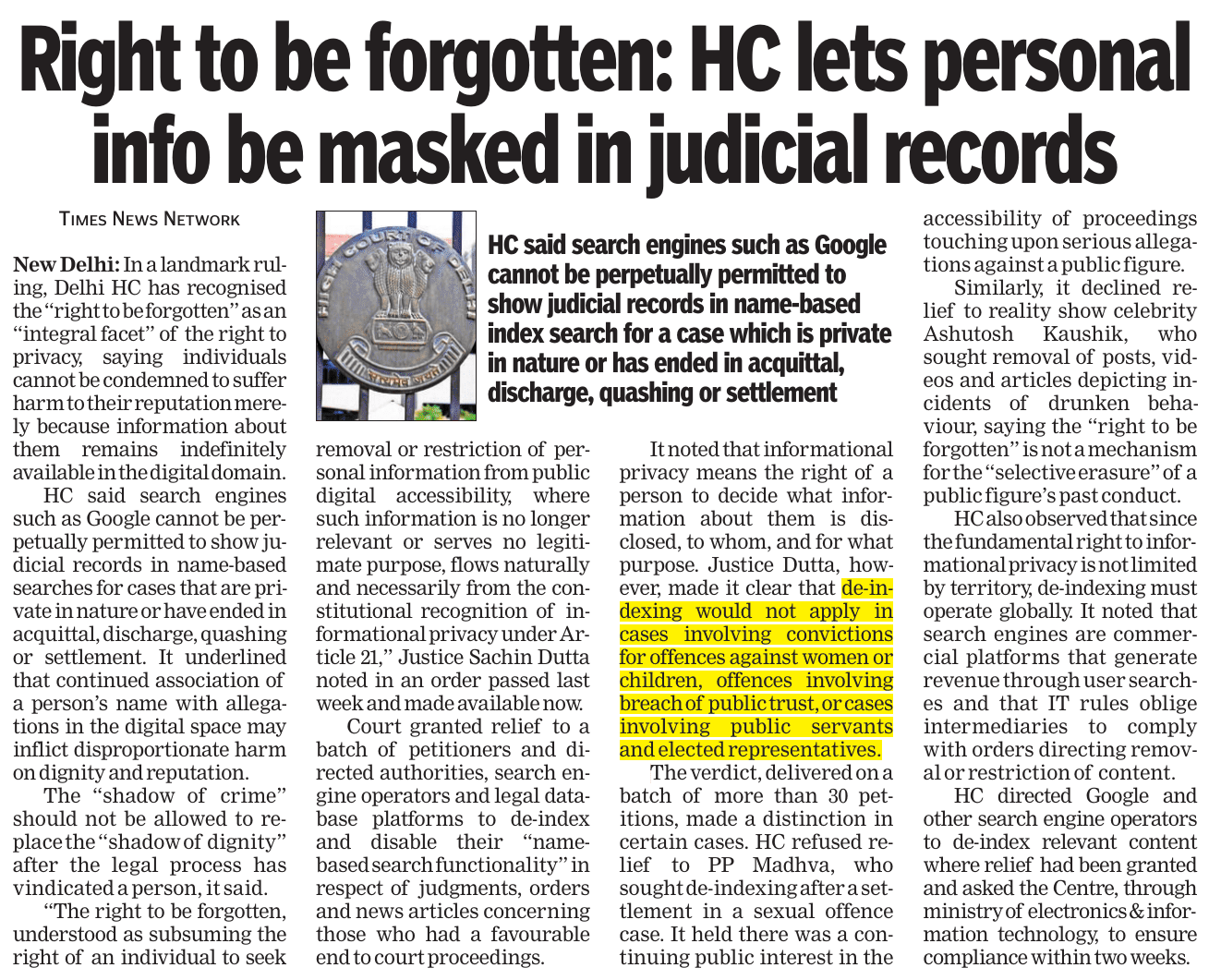
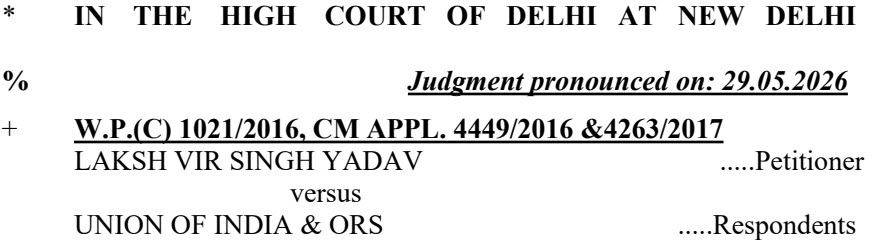
Right to privacy. Right to be forgotten. The High Court of Delhi has issued detailed directions to protect privacy of those who do not wish their personally identifiable information to be available in public domain through search-engines like Google Search, Microsoft Bing, etc. (click this link to download the Judgment). But the question is, how far it will be successful to implement these directions in practice. Well, we in TheLawyerics are not very hopeful. To our knowledge, first such case was decided by the European Court of Justice (ECJ) on May 13, 2014 – Google Spain v. Agencia Española, C-131/12. The logic behind such directions is that everything available on Net is not always up to date. The information becomes stale with passage of time. Besides, some persons do not wish their personal information to be available to others. This conflicts with principles like right to free speech, right to know, open society, information society, etc. These problems arise from the easy availability of information across the world through digital and electromagnetic technologies. We at TheLawyerics have often said in posts that these technologies have annihilated time and space which are the two parameters through which the physical world operates. Now the information travels from one part of the globe to the other practically in no time. The information is digitised and then electromagnetic waves or the optical signals carry them. There is virtually no travel time.
The Internet searches do not show that ECJ ruling stands fully implemented in all sincerity. The search engines may carry out the court directions but in digital environment, it is possible to correlate the information from various sources and defeat the very purpose of masking, redaction, and similar measures. Various AI models, whether it is ChatGPT, or Claude, or some other model, are capable of correlating the information, and provide you nearly complete information.
There is a popular Indian saying, “हमाम में सब नंगे होते हैं” (“everyone is naked in a common bathing room”).
Besides, a judicial order is generally understood in the context of a particular case. It is the practice in law that all facts are adequately incorporated in the judicial order itself so that it is self-contained. It is doubtful whether a judicial order would be capable of being properly understood if its contents are partly disclosed and partly withheld. It needs to be decided as a policy whether we wish to have open court system or a private court system.
The directions of the Delhi High Court are only a patchwork solution. A comprehensive framework is required to balance competing interests of stakeholders.
The Internet searches do not show that ECJ ruling stands fully implemented in all sincerity. The search engines may carry out the court directions but in digital environment, it is possible to correlate the information from various sources and defeat the very purpose of masking, redaction, and similar measures. Various AI models, whether it is ChatGPT, or Claude, or some other model, are capable of correlating the information, and provide you nearly complete information.
There is a popular Indian saying, “हमाम में सब नंगे होते हैं” (“everyone is naked in a common bathing room”).
Besides, a judicial order is generally understood in the context of a particular case. It is the practice in law that all facts are adequately incorporated in the judicial order itself so that it is self-contained. It is doubtful whether a judicial order would be capable of being properly understood if its contents are partly disclosed and partly withheld. It needs to be decided as a policy whether we wish to have open court system or a private court system.
The directions of the Delhi High Court are only a patchwork solution. A comprehensive framework is required to balance competing interests of stakeholders.
TheLawyerics
Click the link below to download PDF
right-to-be-forgotten
right-to-be-forgotten