Digital and Electro-magnetic technologies
(they need different legal framework)
(they need different legal framework)

I have often said in my posts that digital and electromagnetic technologies are having deep transformative effect on our lives and they need a revamped legal framework. Reason is that whatever laws we have been framed are based on human activity in time and space. The law had to take the calls whenever there were technological changes. There are some interesting examples to illustrate this point.
The law of contract was developed keeping in view two situations, one was when there was face to face offer and acceptance, and second was when offer and acceptance were transmitted by means of postal communications. Third situation arose when telephone was invented and it was possible to have instant communication though the parties were separated by distance. The matter was resolved by the Supreme Court of India in Bhagwandas Goverdhandas Kedia v. Girdharilal Parshottamdas, 1965 SCC OnLine SC 38: (1966) 1 SCR 656: AIR 1966 SC 543, by treating telephonic conversation as face-to-face communication for the purpose of contract.
Similarly, way back in 1880, the House of Lords was confronted with a situation where law relating to telegraph was available but there was no law relating to telephone [Attorney-General v. Edison Telephone Co., (1880) 6 QBD 244 (HL)]. Technologies are different but for the purpose of law, definition of telegraph was bent to include telephone also. The same bent definition was applied in Indian Telegraph Act, 1885, though it appeared to be quite odd. It was only in 2023, when Telecommunications Act was enacted, this oddity was removed.
The digital and electromagnetic technologies have moved at a much faster pace whereas law is trailing behind. These two technologies have practically annihilated time and space. We are moving from physical to virtual world. Present laws are inadequate to deal with transformative effect on our individual lives, our social lives, our national lives and international lives.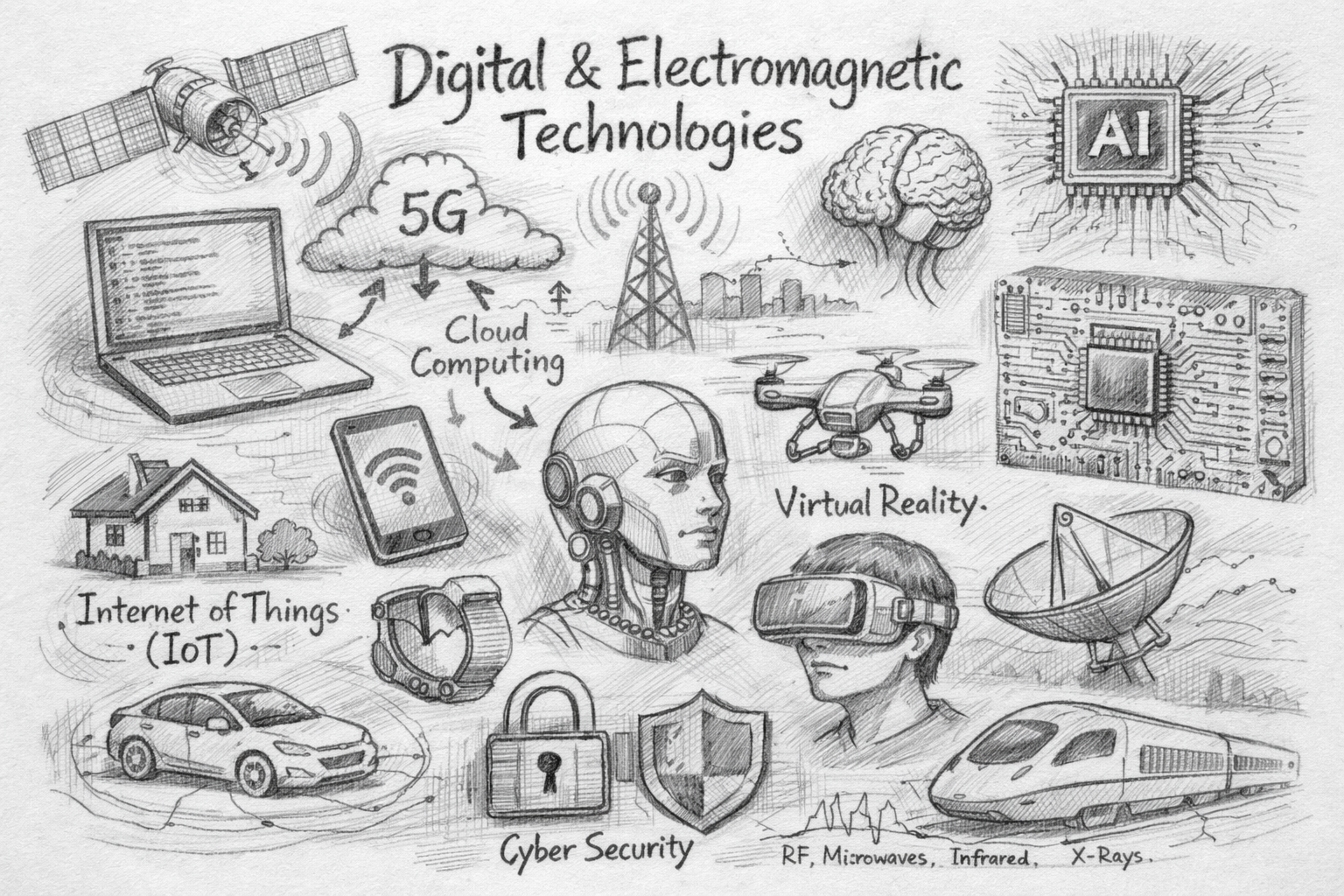 For the time being, everywhere in the world, the Governments are resorting to patchy legal solutions which are not yielding desired results.
The law of contract was developed keeping in view two situations, one was when there was face to face offer and acceptance, and second was when offer and acceptance were transmitted by means of postal communications. Third situation arose when telephone was invented and it was possible to have instant communication though the parties were separated by distance. The matter was resolved by the Supreme Court of India in Bhagwandas Goverdhandas Kedia v. Girdharilal Parshottamdas, 1965 SCC OnLine SC 38: (1966) 1 SCR 656: AIR 1966 SC 543, by treating telephonic conversation as face-to-face communication for the purpose of contract.
Similarly, way back in 1880, the House of Lords was confronted with a situation where law relating to telegraph was available but there was no law relating to telephone [Attorney-General v. Edison Telephone Co., (1880) 6 QBD 244 (HL)]. Technologies are different but for the purpose of law, definition of telegraph was bent to include telephone also. The same bent definition was applied in Indian Telegraph Act, 1885, though it appeared to be quite odd. It was only in 2023, when Telecommunications Act was enacted, this oddity was removed.
The digital and electromagnetic technologies have moved at a much faster pace whereas law is trailing behind. These two technologies have practically annihilated time and space. We are moving from physical to virtual world. Present laws are inadequate to deal with transformative effect on our individual lives, our social lives, our national lives and international lives.
Digital and electromagnetic technologies
The world is drifting into a chaotic situation because digital and electro-magnetic technologies are arming everyone with so much of autonomy that he or she can do whatever he or she likes in the virtual world. It is quite possible that Austin’s concept of State authority may become irrelevant after some time. Citizenship may be replaced by netizenship, or at least netizenship may coexist with citizenship.
The way fancy for AI is being propagated by the vested interests, might permanently change the behaviour of mankind. Now is the time to think that we are human beings. Technology is not our master. We are the masters of this planet. Our existence depends not only our concern for each other, but for other species also. Our future lies in peaceful coexistence. Modern technologies are for our aid, and they are not our masters. The legal framework needs to be devised accordingly.
In India, we can make a moderate start by amplifying Article 51-A(h) of the Constitution by adding the expression “and to use and promote digital and electromagnetic technologies consistent with the constitutional goals”. The amplified Article 51-A(h) will read like this, “to develop the scientific temper, humanism and the spirit of inquiry and reform, and to use and promote digital and electromagnetic technologies consistent with the constitutional goals.” This solemn promise will not only bind individual citizens but also State authorities, including legislatures.
It is also desirable that apart from the above constitutional amplification, a master legislation is enacted declaring that State authorities, including courts, can suitably adapt existing laws so as to make them work effectively in the environment driven by digital and electromagnetic technologies. It is possible to insert new provision in the General Clauses Act, 1897 but it is desirable a new legislation is enacted.
This is only a moderate start. In the long run, a comprehensive legislation is needed to cover all aspects of human activities arising from and digital and electromagnetic technologies.
The way fancy for AI is being propagated by the vested interests, might permanently change the behaviour of mankind. Now is the time to think that we are human beings. Technology is not our master. We are the masters of this planet. Our existence depends not only our concern for each other, but for other species also. Our future lies in peaceful coexistence. Modern technologies are for our aid, and they are not our masters. The legal framework needs to be devised accordingly.
In India, we can make a moderate start by amplifying Article 51-A(h) of the Constitution by adding the expression “and to use and promote digital and electromagnetic technologies consistent with the constitutional goals”. The amplified Article 51-A(h) will read like this, “to develop the scientific temper, humanism and the spirit of inquiry and reform, and to use and promote digital and electromagnetic technologies consistent with the constitutional goals.” This solemn promise will not only bind individual citizens but also State authorities, including legislatures.
It is also desirable that apart from the above constitutional amplification, a master legislation is enacted declaring that State authorities, including courts, can suitably adapt existing laws so as to make them work effectively in the environment driven by digital and electromagnetic technologies. It is possible to insert new provision in the General Clauses Act, 1897 but it is desirable a new legislation is enacted.
This is only a moderate start. In the long run, a comprehensive legislation is needed to cover all aspects of human activities arising from and digital and electromagnetic technologies.
TheLawyerics
Click the link below to download PDF
Digital and Electromagnetic Technologies Laws
Digital and Electromagnetic Technologies Laws