
AI and law
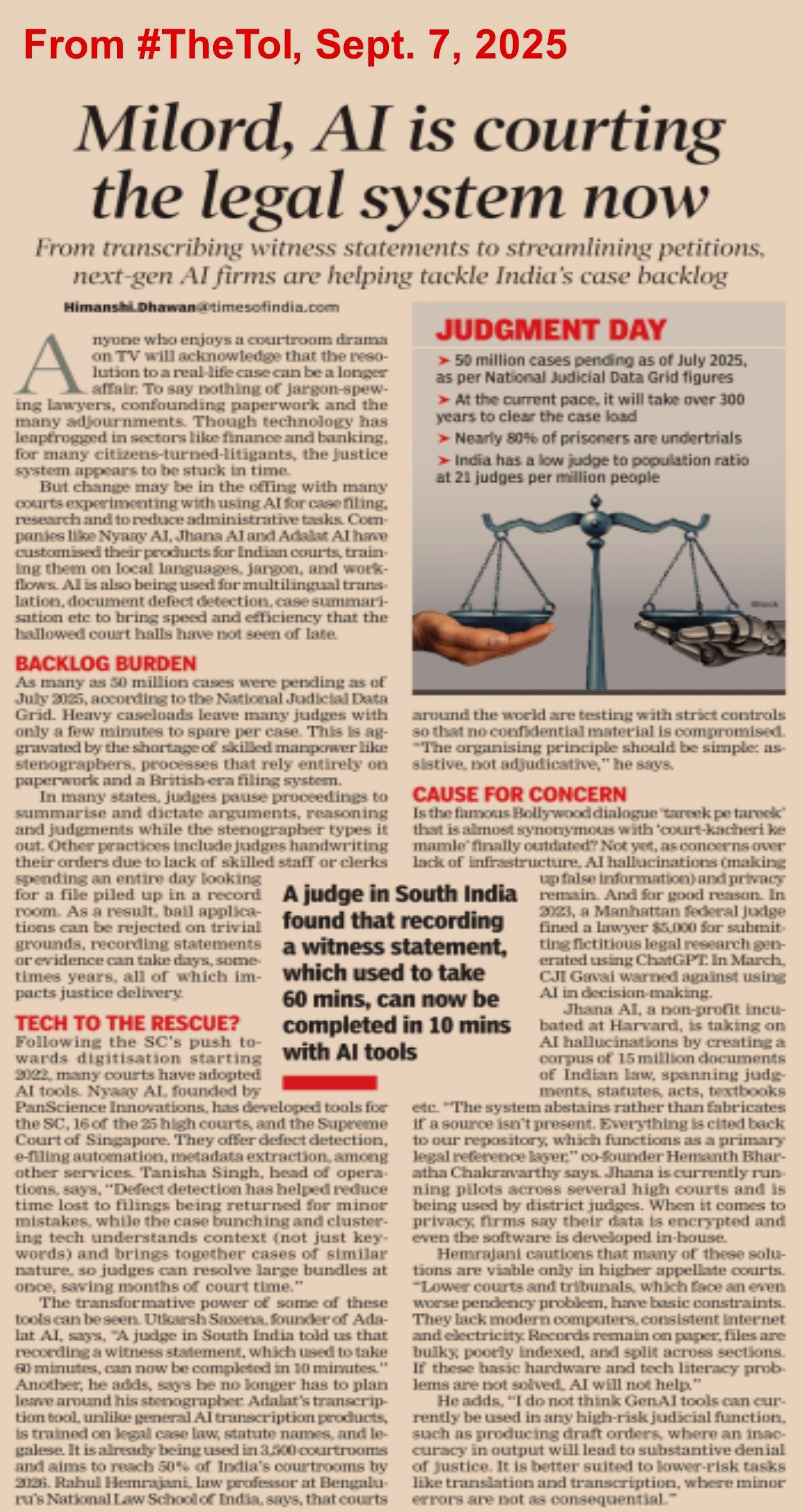
The way judicial system is sinking into delays and arrears, calls for urgent need to tone it up before it becomes too late. Modern technology offers hope but my personal experience in legal practice and use of technology highlights two impediments. First is unwillingness of legal community to change mindset. Both inside the judiciary and in lawyers’ circle, some persons have too much love for feudalistic system. They are allergic to change. It serves their parochial needs. Their personal interests are higher than interests of public at large. This a self-destructive tendency. Public faith in judicial system is eroding. In my law practice, I have closely observed that people are not bothered about lofty principles of law. They do not place lawyers on a high pedestal of respect. The public’s practical approach is that if the judicial system solves their problem, and brings some relief, it is acceptable otherwise public tries to go its own way. This is what I observe from my interactions with clients. The system must adapt itself to changing public needs.
AI and law
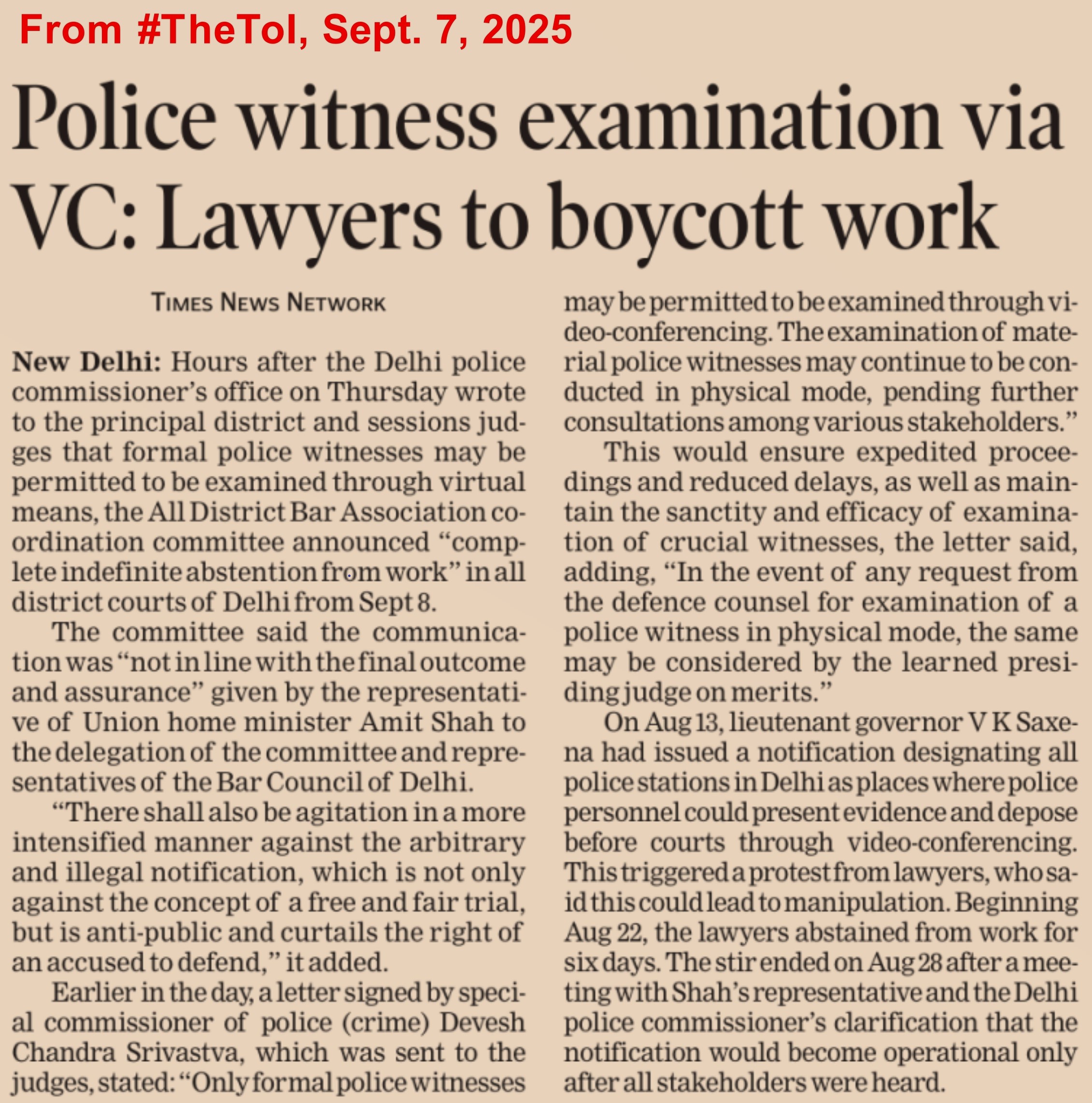
Take for example the way recording of police evidence by electronic means is being opposed in Delhi. Lawyers have gone on strike. It is a time-saving measure.A police official who needs one hour to record his deposition through video-conference, would spend full day, or at least half day to be physically present in court. Would it not be better if she spends more time in her law and order duties than sitting idle in courts?
But at the same time, there is need to be cautious against excessive use of AI in legal practice. Presently, AI is not so developed to completely replace a lawyer. It is only an assistive tool. I have used several AI models such ChatGPT, Perplexity, DeepSeek, Gemini, Copilot, etc. They have their own limitations. Once you open Microsoft Office, Copilot will jump in to offer you to prepare a document for you but it cannot prepare a legal document to the desired satisfaction. You will find some shallowness and artificiality in it. It does not have flavour of legal expertise. Take for example, I asked both ChatGPT and Copilot to provide a draft agreement for live-in relationship. It took them one second to provide draft. ChatGPT incorporated the following clause regarding the children born out of relationship, “In the event the parties have or adopted a child, they shall mutually decide issues of custody, guardianship, education, and upbringing, in the best interest of the child” Copilot suggested as follows, “If the partners have children, additional agreement regarding custody, education and financial responsibilities should be documented separately” Both these drafts do not properly take care of Indian law and do not provide sufficiently elaborate provisions regarding children born out man-woman relationship. Similarly, both these documents proceed on the presumption that live-in partners would live like a nuclear family. Elders have been overlooked. After all it is an intelligence which is artificial. It lacks naturality. If a lawyer has to make several changes in the draft, she will prefer to prepare the whole draft from beginning to end, instead picking some portions from AI provided draft and something from his own knowledge.
Likewise, I have tried AI on drafting of pleadings but this too did not yield satisfactory results. The drafts are too general in nature. They do not have customised approach needed in the context of facts and circumstances of a particular approach. Reason is that the general model of AI do not incorporate specialised features of law. It may be that a team of retired judges, lawyers having expertise in different fields and AI experts collaborate to create model suited to law. At present, it is not there.
However, existing AI tools are useful for assistive purpose. They can organise the documents you need to prepare yourself for a case so that your time and labour is saved. You can highlight important portions so that you remain focused and close your arguments in shortest possible time. These documents are quite useful inside court. Likewise, there are Apps which can provide assistance is scheduling your activities.
Ultimately, the supervised and judicious use of AI can be useful in a judicial system but its wanton use without employing a judge or a lawyer’s skill in law, is disastrous. Everyone in legal field must decide for himself what to use from AI and what to avoid.

TheLawyerics
AI – Assistive Role in Judicial System